Tianjin Beida Wire & Cable Group Co., Ltd.
News

The difference between medium-voltage and low-voltage power cables.

2026-01-28 0 Leave me a message

The core difference between medium-voltage and low-voltage power cables revolves around their rated voltage levels, leading to comprehensive differences in structural design, material standards, installation requirements, and application scenarios.  They are adapted to different distribution levels of the power system; low-voltage cables are primarily used for terminal distribution (household/workshop/equipment), while medium-voltage cables are mainly used for medium-voltage transmission lines in cities/factories.

Key Details Analysis (Underlying Reasons for Core Differences)

1. Voltage Rating and Insulation Design: Medium Voltage's "Exclusive Specifications"

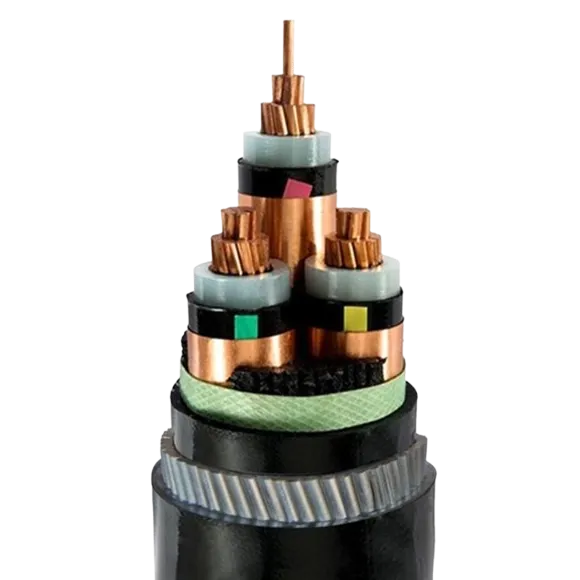
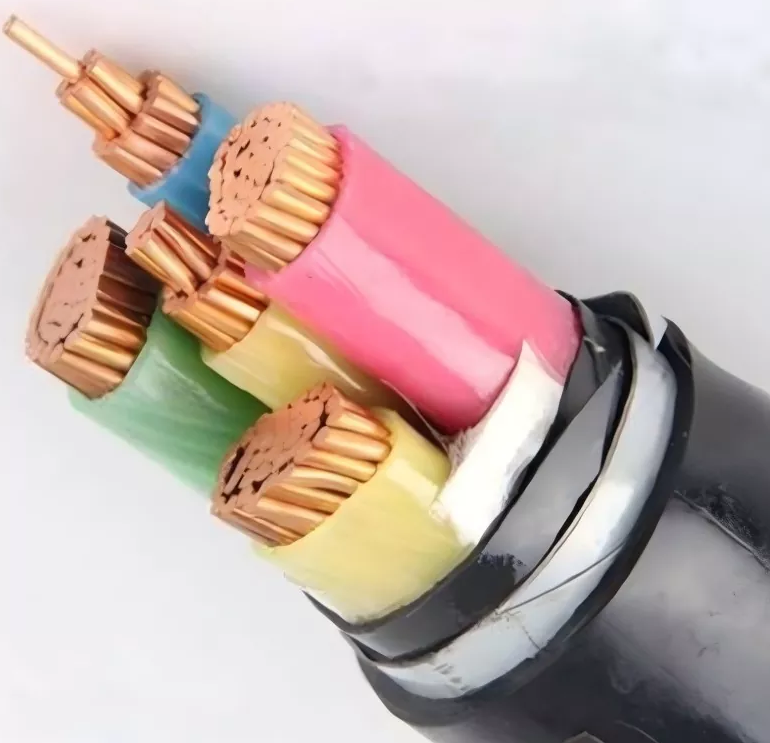
Low-voltage cables are rated 0.6/1kV, representing a conductor-to-ground/phase-to-phase rated voltage of 0.6kV and a line-to-line rated voltage of 1kV (the commonly used 380V/220V falls within this range). The insulation only needs to meet basic voltage resistance requirements and is relatively thin. Medium-voltage cables are typically rated 8.7/10kV, representing a phase voltage of 8.7kV and a line voltage of 10kV. Due to the high voltage, corona discharge (ionization of air under high voltage) can easily occur on the conductor surface, which can break down the insulation. Therefore, a double-layer shielding is necessary:

Main shielding (conductor shielding): Wrapped around the outside of the conductor to eliminate electric field distortion on the conductor surface and prevent corona discharge;

Insulation shielding: Wrapped around the outside of the main insulation to equalize the electric field and prevent partial discharge;

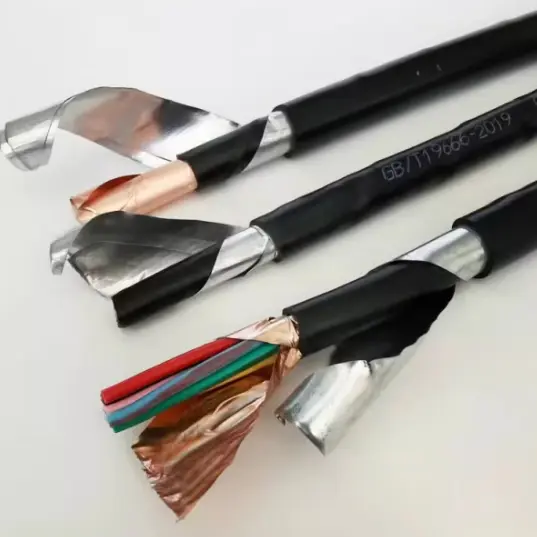
Further supplemented by a metal sheath (aluminum sheath/copper sheath) to further shield the electric field and prevent insulation from moisture. This is the most fundamental structural difference between medium-voltage and low-voltage cables (low-voltage cables do not have this design).

2. Number of Cores and Distribution Logic: Hierarchical Division of the Power System

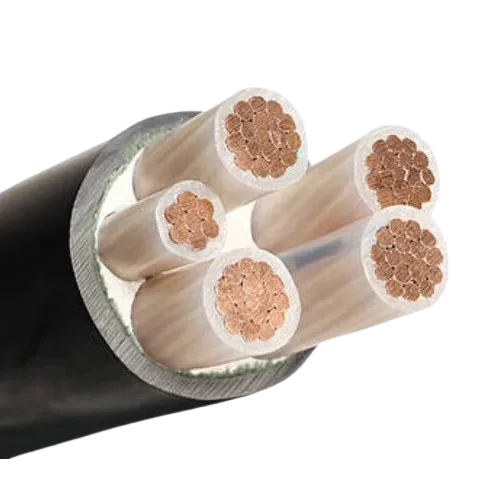
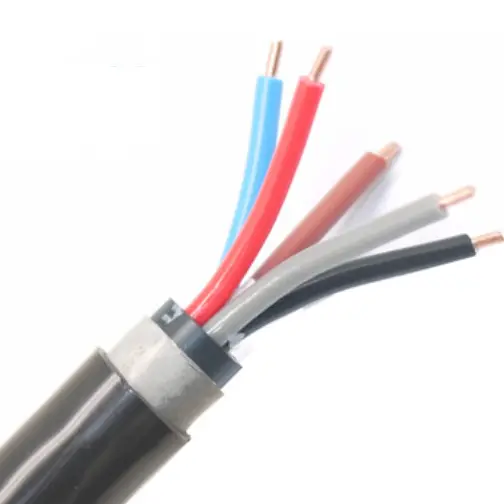
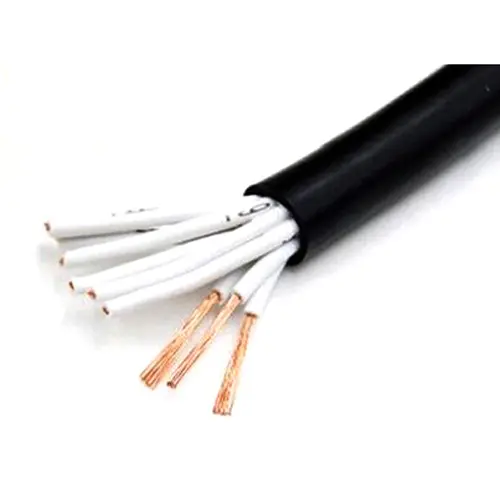
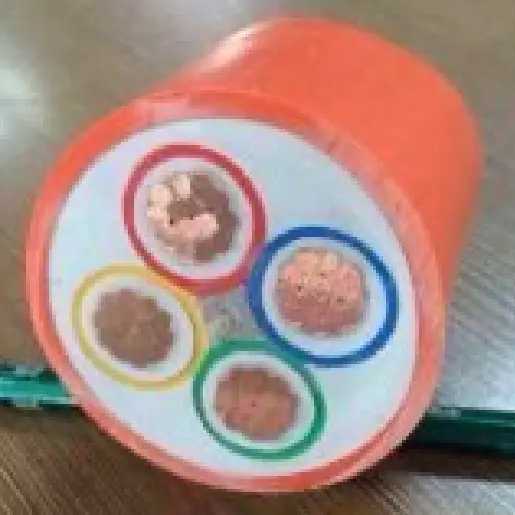
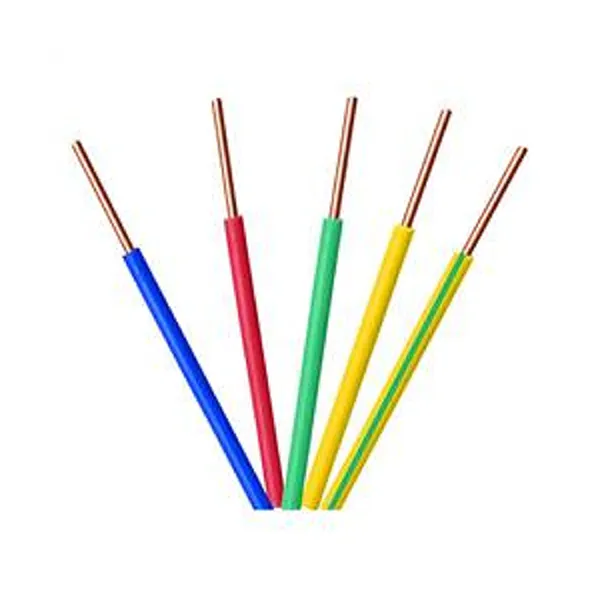
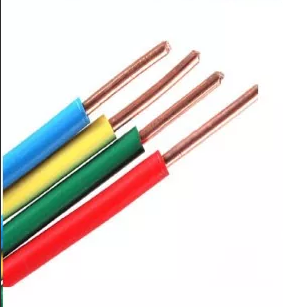
Low-voltage cables mainly have 4 or 5 cores because low-voltage distribution uses a three-phase four-wire/five-wire system, requiring a neutral wire (N) for 220V single-phase power (household appliances/lighting) and a ground wire (PE) for leakage protection, adapting to the diversity of terminal power consumption. Medium-voltage cables are predominantly 3-core because medium-voltage power systems (6kV/10kV/35kV) are three-phase three-wire systems with no neutral wire. They are used only for the main transmission of three-phase power. After reaching the substation, the voltage is reduced to 0.4kV (380V/220V) through a transformer, and then low-voltage cables are used for terminal distribution. Medium-voltage cables do not directly connect to electrical equipment.

3. Materials and Specifications: The "High-Requirement Standards" for Medium Voltage

Insulation Material: Low-voltage cables can use PVC (low cost) or XLPE; however, medium-voltage cables can only use XLPE because XLPE's temperature resistance (90℃), dielectric breakdown strength, and aging resistance are far superior to PVC, meeting the insulation requirements under high voltage. PVC would age and break down quickly under medium voltage.

Conductor Cross-section: As main transmission lines, medium-voltage cables need to transmit large currents for the entire area/factory. Therefore, the cross-section is generally above 25 mm², and can reach up to 800 mm², and are mostly copper core (a few outdoor main lines use aluminum core YJLV); low-voltage cables are for terminal branches, and their cross-sections are mainly small sizes. 4. Installation and Testing: Safety Management of Medium-Voltage Cables

Low-voltage cables offer flexible installation options, including conduit installation, surface mounting on walls, and direct burial without special protection. However, due to the high voltage, leakage/breakdown of medium-voltage cables can lead to major safety accidents (such as electric shock, fire, and power grid failure). Therefore, installation requirements are stringent:

Direct burial requires laying sand and covering with concrete bricks in the cable trench to prevent mechanical damage;

A safe distance must be maintained from other pipelines (water pipes, gas pipes) and roads (e.g., a distance of ≥1m from gas pipes);

Surface mounting on outdoor/indoor walls is strictly prohibited; installation is only permitted in dedicated cable trenches, cable trays, or conduits;

Partial discharge testing (a core test for medium-voltage cables) must be performed before leaving the factory and after installation. The partial discharge level must be ≤10pC to prevent minor defects in the insulation from causing breakdown later. This test is not required for low-voltage cables.


Related News
Leave me a message
X
We use cookies to offer you a better browsing experience, analyze site traffic and personalize content. By using this site, you agree to our use of cookies. Privacy Policy
Reject Accept